To really know a place, you’ve got to dig up its past. Thankfully, Arkansas historians work tirelessly to unearth and unravel the state’s rich heritage, sharing the fascinating people and stories that built its culture. So, why not hit the road and discover some of that history for yourself?
WESTERN ARKANSAS
Start close to home and tour Arkansas’s frontier country. “From the beginning we were a military community,” says Tom Wing, assistant professor of history at the University of Arkansas–Fort Smith and director of the Drennen-Scott Historic Site.
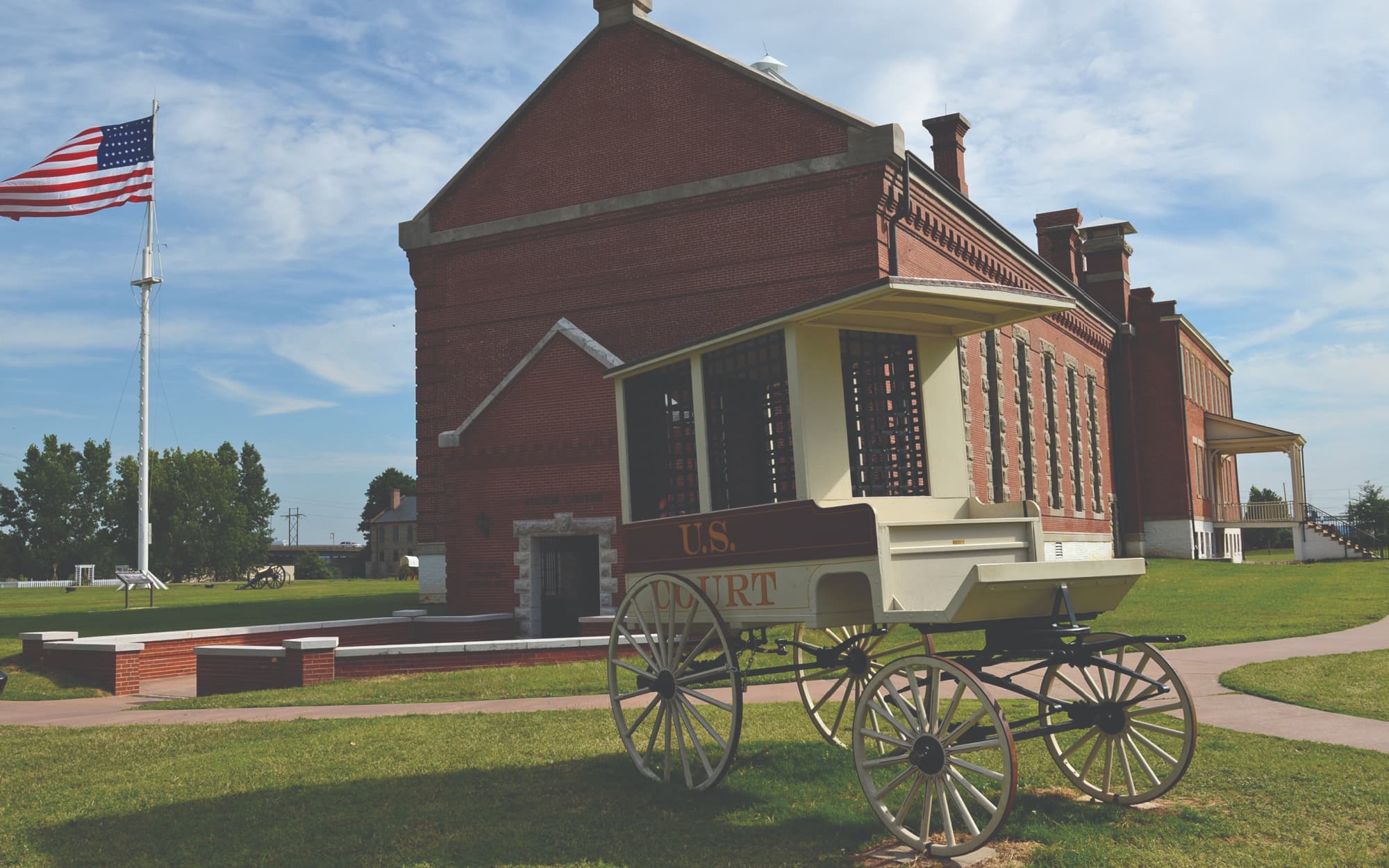
Fort Smith National Historic Site offers a well-rounded history of the area’s military activity, jurisdiction over adjacent Indian Territory and Judge Isaac C. Parker, of “Hanging Judge” fame. Nearby, the Fort Smith Museum of History brings the city’s past to life, the Fort Smith Trolley Museum preserves its transportation heritage, and the Fort Smith National Cemetery honors generations of military veterans. For a unique perspective, Miss Laura’s, a museum within a restored Victorian brothel, shares the experiences of women who worked there during the Wild West era.
A stone’s throw away is Van Buren, with its picture-worthy Victorian downtown and Crawford County Courthouse. End your tour at the Drennen-Scott Historic Site, which preserves the home of one of Van Buren’s founders while examining his role as a slave owner and Indian Agent to the Choctaw Nation.
NORTHWEST ARKANSAS
An extensive collection of Native American history and culture is on display at the Museum of Native American History in Bentonville, where more than 10,000 artifacts are displayed alongside a 12-foot-tall woolly mammoth skeleton.
Nearby Crystal Bridges houses significant works of American art, from Audubon to Rockwell. Pea Ridge National Military Park preserves the site of a pivotal Civil War battle, where 23,000 soldiers fought in 1862. Not far away, Prairie Grove Battlefield State Park hosts the state’s largest reenactment each December.
THE OZARKS
The Ozarks are peppered with historic mountain towns, from Calico Rock to Eureka Springs. Start your tour of Eureka Springs at the notoriously haunted 1886 Crescent Hotel, then spend the afternoon taking in downtown’s Victorian charm. Don’t leave without a stop at Thorncrown Chapel, designed by architect E. Fay Jones, where you can watch leaves flutter through the towering windows of this glass sanctuary.
Another Ozarks destination known for preserving its heritage is Mountain View, the self-proclaimed “folk music capital of the world.” The town square regularly hosts live music, and the Ozark Folk Center showcases traditional artisans making things the old-fashioned way.
Nearby Norfork is home to the 1829 Jacob Wolf House, an early courthouse that witnessed Cherokee travelers passing through during their journey on the Trail of Tears.
NORTHEAST ARKANSAS
Parkin Archaeological State Park preserves a Native American village from the Mississippian Period, displaying pottery and other artifacts and offering tours of native-built earthen mounds.
Next, visit Powhatan Historic State Park to feel like you’ve stepped into the 19th century, with seven preserved historic buildings.
Don’t leave the area without stopping by the Hemingway-Pfeiffer Museum in Piggott, where Ernest Hemingway spent time writing, and the Johnny Cash boyhood home in Dyess, restored to appear as it did when the musician grew up there.
THE DELTA
“What makes the Delta special is that its history isn’t simply something we preserve behind glass. It is a culture that is still very much alive today,” says Delta Cultural Center Director Ronni Schwantz.
In historic downtown Helena, the Delta Cultural Center catalogs the region’s past, from Native American life and early European settlement to slavery, the Civil War and river transportation. This month marks the 85th anniversary of King Biscuit Time, the longest-running daily blues radio program in the country.
Those wishing to trace the region’s colonial past may visit Arkansas Post National Memorial, the site of the first semi-permanent French settlement on the lower Mississippi.
End your visit to the Delta in McGehee at the WWII Japanese American Internment Camp Museum, preserving the story of thousands of Japanese Americans forcibly relocated to Rohwer during World War II.
CENTRAL ARKANSAS
Start your tour at Plum Bayou Mounds Archaeological State Park, the state’s largest and most complex system of Native American mounds. Next, head to the capital city.
“I’d start downtown at Julius Breckling Riverfront Park, home of our namesake ‘Little Rock’ and outdoor exhibits on early settlement in the area including the Quapaw Nation,” says Ian Beard of Historic Arkansas Museum.
Downtown’s Historic Arkansas Museum, Old State House Museum and Mosaic Templars Cultural Center explore different chapters of Arkansas history. Nearby Civil Rights landmarks include Little Rock Central High School National Historic Site and the Daisy Bates House.
One of Arkansas’s greatest historic gems is a short drive away. Hot Springs, federally protected since 1832, boasts a colorful past, from its days as a Victorian resort town known for healing waters to its notorious stint as a gangster hideout in the 1930s.
Strolling Bathhouse Row, you can experience the famous hot mineral waters steaming from fountains and designated collection spouts. While on Central Avenue, cool off at the Ohio Club, the oldest continually operating bar in the state.
“Inside the Ohio Club, check out the massive, hand-carved mahogany bar,” notes Garland County Historical Society Executive Director Elizabeth Robbins. “It arrived in 1911 after a tough journey by river barge, train, and wagon from Covington, Kentucky.”
Ready to plan your own trip through Arkansas history? Find more destinations and travel inspiration at Arkansas.com.